
This article discusses the issue of climate change with the polar ice caps in Greenland. With the climate shifting, snow and ice are melting, which makes it more unlikely that it will return to normal arctic conditions. The changes occurring in Greenland are affecting the atmosphere, ecosystems and human activity all over the globe. The polar ice caps are melting due to the warmer air waves in the north. The cold air is now being sent from the north to the south, while in the past it went from east to west. Last year's different weather patterns show the changes in our environment, such as the change in temperature in the Arctic Ocean and the higher land temperatures are affecting us. The glaciers in Greenland are also losing more surfaced area due to the changes in the weather and the amount of time it takes for them to melt, which is increasing rapidly. Also, due to this unusual weather, the sea level is rising, which also affects weather conditions. Our course is related to these issues because we will learn and get into great detail about weather patterns, world climates and global climate change. By learning about these topics, we can figure out how we can predict what is going to happen. The best was to understand what is going on is to be educated with the facts. Without knowing how the melting f ice caps is going to affect us, why would we consider it to be an issue? We need support in order to help our environment. Also, with our winters getting colder and our summers getting warmer, how are we as a species going to be able to adapt to these changes? Are other species going to be able to adapt also? Is it possible to have another ice age? By conducting experiments and researching what has occurred in the past, we are able to help further predict our future and understand how Earth is changing. For these reasons, it is important that Earth Science is kept in our curriculum. We need to understand these issues in order to solve them. I think this article discusses important issues that our youth does not understand fully. We mention global warming but do not comprehend it fully. Climate change is a major issue that has been creeping up on our Earth, but has never been viewed as a problem. I think more articles should be posted about how climates are changing and how they can impact us. We need to tell the world what is happening and not hide it.
http://www.nytimes.com/cwire/2010/10/22/22climatewire-the-arctic-shifts-to-a-new-climate-pattern-i-86771.html?ref=earth
Tuesday, October 26, 2010

Wednesday, October 20, 2010
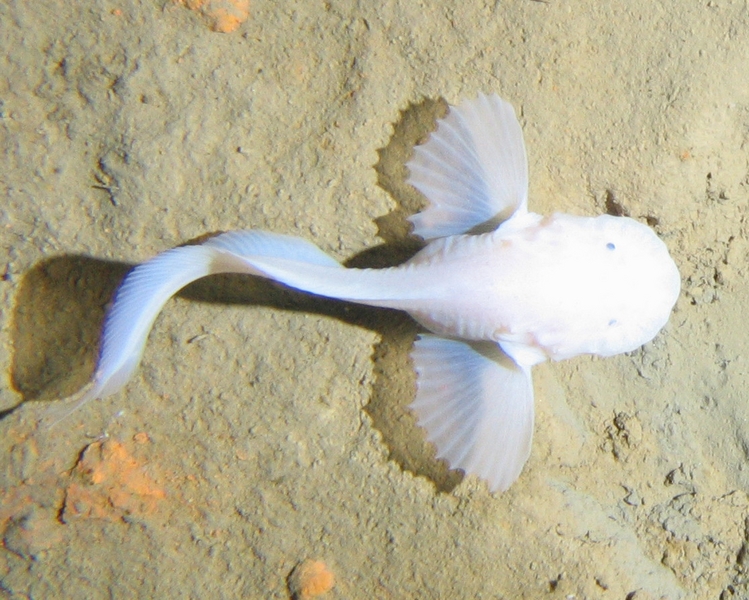
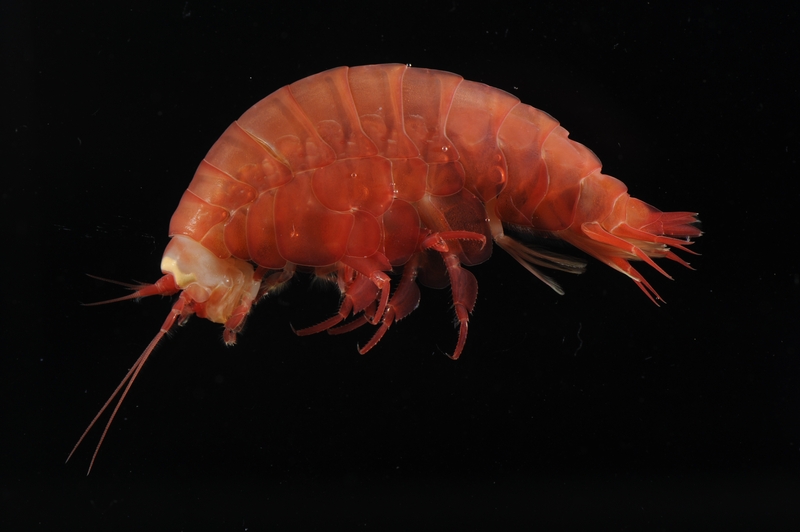
Scientists discover new species in one of world’s deepest ocean trenches
http://www.abdn.ac.uk/news/details-9266.php
This article was about marine biologists from New Zealand and Japan discovered fish in the trenches of Peru-Chile. The species discovered have never been captured on camera before and live 7000m deep. There were snailfish, large crustacean scavengers, and cusk-eels deep down in the trench. With the use of high-tech equiptment the marine biologists were able to capture the species for three weeks. Also, this expedition that went on was the seventh to take place in part of HADEEP. That is a collaborative research between the University of Aberdeen's Oceanlab and the University of Tokyo's Ocean Research Institute. They were known for their deep ocean research for three years. This trench was believed to be void of any type of fish, and now discovered an entirely new species. The marine biologists also stated that the trench located in Peru-Chile is one of the deepest trenches in the world.
I thought that this article relates to the course because of the trench and plate tectonics. A trench is formed from the collision of plate tectonics. The trench occurs when there is subduction happening between two plates. One plate will push into another plate, and it will go below that plate. From that happening, the trench will form on the top of both of the plates.
From the information in this article, I found it very interesting. I was surprised to think that people would believe that an area like that trench would be void of any existence. With all of the technology used it was entertaining to read how soon they found a new species of fish. Not only did they find one new species of the snailfish, but I thought it was fascinating that they also found another type of crustacean scavangers, and cusk-eel. It really shows how much area people have not searched for living species. With such a large amount of water who knows what could be down in there. Especially with plate tectonics moving and having more spaces between that where other things can be hiding. Overall, I thought this article was very interesting and happy that I stumbled upon it.
-Kelsey Cappello

Sunday, October 17, 2010
Haiti Study Shows Higher Risk Of Tsunamis In Major Cities Than Previously Thought

Fault: California Coast

Fault: Istanbul Coast

Fault: Kingston Coast

Fault: Port Au Prince, Haiti
On October 11, 2010, ScienceDaily announced that Geologists from across the globe studying the Jan. 12 earthquake in Port Au Prince, Haiti had found in their research, that cities such as. Los Angeles, Kingston, and Istanbul are at a higher risk for destructive tsunami’s than ever expected. Scientists concluded this after looking at the parts of the island where the 9 ft.. high, tsunami waves had landed on shore, generated by the magnitude 7 earthquake. They also developed geological field surveys at sites on and offshore, close to the earthquakes epicenter. They found that the tsunami, which occurred there, was mainly caused by weak sediment along the shore that had slid down along the seafloor and had created the displacement of the overlying water in the ocean. The scientists gathered data from faults beneath the ocean floor and land, the vertical movement of land, underwater topography of the seafloor and the evidence of the waves created by the tsunami. The study showed that, “Combined with newly discovered evidence of historic tsunamis, the survey revealed a third of all tsunamis in the area are generated in this way.”
Haiti’s capital as well as Los Angeles, CA Kingston, Jamaica, and Istanbul, Turkey are all located on the coast and are all located near active geological features called strike-slip faults. These faults are created where two tectonic plates slide past and rub against each other. Geologists previously had thought that these faults did not have a high tsunami risk because when they rupture, they do not vertically displace the seafloor, which is how most tsunamis result. The most recent research studies, like the one discussed above, suggest that even if moderate earthquakes are present at these faults, it could in fact generate tsunamis without evening creating the vertical displacement of the ocean floor. The research showed that even if moderate earthquakes were to occur on these strike-slip faults tsunamis could be generated by means of submarine landslides.
"Organizations that issue tsunami warnings usually look for large earthquakes on thrust faults," said Hornbach. "Now we see you don't necessarily need those things. A moderate earthquake on a strike-slip fault can still be cause for alarm."
This news report goes along well with many of the things we have studied in depth in our Earth Science course. It connects many of the different geological features and occurrences that we have discussed and shows how they are connected and work together. First, plate tectonics and boundaries are the basis of this study. We learned about the evidence for the theory of plate tectonics and we have previously studied the different rock formations caused by the force of plates and the cause of earthquakes. Having knowledge in the different boundaries (convergent, divergent and transform) helped me to understand what the article was saying. This issue is also related to our course through our discussion of the difference between uniformitarian’s and catastrophism. Earthquakes, which create tsunamis, (when they occur underwater at plate boundaries) are both examples of catastrophism (violent events, that change the geological landscape of the earth). Furthermore, we recently discussed topography and this research used underwater topography to study the cause of tsunamis at these plate boundaries where there are submarine landslides. We learned how topographic maps are important tools when it comes to the study and effective interpretation of our earths land features. All of these topics regarding this news report are connected to many of the aspects of physical science we have studied.
We have previously seen the damage of tsunamis like the one in Indonesia in 2004 and we must take action and take certain steps to try and find new methods of predicting/ seeing the warning signs of tsunamis. We also must provide a better system of advanced warning to people who live near these high-risk areas. I found this current research and issue to be very frightening in many ways. To think that these strike-slip faults are on the coasts of these highly populated cities is terrifying. I believe that people need to become more aware of the high risk in tsunamis around the globe. Governments should be prepared and ready to take action if one does occur. Perhaps our government should think about putting in place a program which studies these faults, so tsunami warnings can be issued a great deal in advance. It was very helpful to have had learned the background of many of the scientific terms used in the news report, in class. I feel that there needs to be in-depth research and various studies to find out more about submarine landslides causing tsunamis, as well as studies to predict or be able to figure out where faults are that could possibly be at a high risk of tsunamis are. It does give me some relief however, that there are scientists that are dedicated to studying the causes of such great catastrophes like tsunamis and are trying to help in making the aftermath of these events less devastating on the human population by announcing that even moderate earthquakes need to be looked at and tsunami warnings need to be given far in advanced.
“With additional funding from The Society for Geophysics' Geoscientists Without Borders program, Hornbach and others are now conducting a new research project in nearby Jamaica to assess the tsunami threat there. "The geology of Kingston, Jamaica is nearly identical to Port Au Prince, Haiti," said Hornbach. "It's primed and ready to go and they need to prepare for it. The good news is they have a leg up because they're aware of the problem."

Source: University of Texas at Austin (2010, October 11). Tsunami risk higher in Los Angeles, other major cities than thought, Haiti study suggests. ScienceDaily. Retrieved October 15, 2010, from http://www.sciencedaily.com /releases/2010/10/101010133626.htm
Link To Article: http://www.sciencedaily.com/releases/2010/10/101010133626.htm
Friday, October 15, 2010
Toxic Sludge Floods Three Hungarian Towns

On Monday, October 4th, Hungary declared a State of Emergency when a crack in a toxic waste reservoir wall from the Hungarian aluminum production and trading company MAL RT released a gush of highly caustic sludge that completely blanketed sixteen square miles. In total, over 184 million tons of slightly radioactive red sludge, containing heavy metals, such as lead, flooded three towns killing nine people, and injuring over one hundred. Up to two meters (approx. 6.6 ft) of sludge submerged the area, devastating fields, gardens, vehicles, forests, and the ground floors of most houses. Aid and clean up efforts began almost immediately and those burned from the caustic substance were given medical attention and hundreds of police, soldiers, and volunteers worked hosing off houses and shoveling sludge into trucks.
An initial fear, the results of which remain yet to be seen, was that the sludge would flow into and contaminate the Danube river, which flows further from Hungary through Croatia, Serbia, Bulgaria, Moldova, Ukraine, and Romania. Within a day three of the Danube’s tributaries were declared dead (devoid of all life) and workers were scrambling to pour plaster, gypsum, and acetic acid (vinegar) into the water to lower the PH, which rose to a high point of 13 on Monday. While long-term effects remain to be seen, fears of a second flood resulting from a full blow out in the reservoir cracks have been largely relieved as authorities assessed the wall as stable.
In the courts, prosecutors of the company’s CEO, Zoltan Bakonyi, are appealing a judge’s ruling that insufficient evidence exists to indict Bakonyi as personally responsible for the blow out, having been aware of the retaining wall’s condition. Meanwhile, hundreds are homeless, without possessions, and unable and unwilling to go back to their homes. Many feel like schoolteacher Maria Gerencser, who told NPR reporters, "the downstairs is finished, my car is finished, my bicycle is finished, the garden, the yard and everything.”
The sludge-slide is one chilling example of the horrible disasters humans are capable of wreaking on the environment. More so, the deluge will have negative impacts on all four spheres, the biosphere, geosphere, hydrosphere, and atmosphere. The sludge has eliminated all aquatic life in three neighboring rivers, as well as poisoned sixteen acres of gardens, fields, forests, and animals. There has been no official tally of animals killed in the flood. Nevertheless, at a significant disadvantage to humans in terms of being able to save themselves, it is safe to assume that many animals, including nine humans, lost their lives in this tragedy.
Similarly, the sludge poisoned the ground, which is likely to remain unusable for agriculture or habitation for the foreseeable future. The sludge gushed into three tributaries of the Danube and eliminated, in certain areas, all aquatic animal and plant life. Lastly, scientists worry that as the sludge dries, it will be inhaled as dust in the air. This dust will contain carcinogens, which could turn the area near the flood and its victims into a new Chernobyl case.
This article quite simply makes me upset. While I try to have faith in the goodness of humanity, it is difficult to think positive when I see how terribly humankind scars the Earth. I would not call myself a tree-hugger, but it seems logical to me not to bite (or dump toxic sludge) on the hand that feeds and shelters me. Regardless of who is at fault, it seems to me that if making aluminum causes such a caustic and toxic byproduct to be produced, then perhaps we should not produce it at all and do our best with substances that are sustainable, recyclable, and create only an amount of waste that the Earth can process. We are overloading our planet’s natural trash compactor, how could we expect anything other than such drastic consequences?
Sources:
http://www.npr.org/templates/story/story.php?storyId=130348994&ps=rs
http://www.npr.org/templates/story/story.php?storyId=130435525
http://www.npr.org/templates/story/story.php?storyId=130546505
Monday, October 11, 2010
Scientists and Soldiers Solve a Bee Mystery

Together the United States Army and scientists from the University of Montana teamed up to solve the bee mystery. Since 2006, 20 to 40 percent of honey bees have been mysteriously dying from "colony collapse". According to the Army and scientists, a fungus and virus are working together to kill the honey bees. Although the scientists are unsure of how this combination kills the bees, they know that both the virus and the fungus multiply in cool and damp places and these two agents are deadly to the bees. Scientists and the army have not worked together since 9/11, but these two forces came together and were able to connect the pieces of this bee puzzle.
One difficult part of solving this mystery is that the bees do not only die, but they fly away from the hive alone; making it difficult for the scientists to do the bee autopsies. The virus fungus combination is deadly to bees, but only when they work together, alone neither is fatal. This two agent system was present in every bee colony the research team looked at. The army has software that is able to identify a virus based on the proteins it contains, this then allows them to find information that they were unaware that they were looking for. Scientists still need to do more research to see if they can prevent more colony deaths and to see if environmental factors affect the virus and fungus combination. The scientists are still looking for the answer of why the bees fly off to die alone; if it is because they are too weak to fly back, they forgot where there home was, or if the bee has gone insane due to the deadly combination. This operation is at risk because almost every bee colony died this winter.
This is important because it shows how human interactions are affecting the wildlife. The scientists thought that the "colony collapse" were from humans actions like pesticides and modified foods. The virus and fungus that is killing the bees could be caused from humans and the things we are putting into our ecosystem. If honey bees become extinct, plants are going to severely suffer. If the bees disappear, in turn, certain plants will disappear. Thus causing a chain reaction, certain animal species will disappear as well. Honey bees are a very important part of our ecosystem, so it could be deadly to many species if we do not figure out how to keep the bees from dying. The bees do not seem to be adapting to the new viruses and fungus that are appearing in the world today and according to Darwin, the bees are not fit to survive. Scientists need to be aware of the dramatic decrease in the bee population and try to figure out what humans can do to ensure the survival of the honey bees.
By: Rebecca Robinson

Footprint Fossils Offer Earliest Evidence of Dinosaurs’ Ancestors
A new report found that the first appearance of the dinosaur lineage appeared 250 million years ago. The newly found fossils are the oldest that have been found anywhere on earth. The information shows that dinosaurs replaced the animals on earth that died from an earlier extinction, preluding their own.
The footprint fossils give the researchers hope that they might find dinosaur bones within the rocks in the areas. Especially because they were all rare. Only 2 percent to 3 percent of the footprints at the sites were to be from these dinosaur cousins, which were far outnumbered by lizards, amphibians and crocodilian reptiles. The evidence provides proof that these dinosaur ancestors are some of the first to be around after the initial extinction. The footprints now allow scientist to create a timeline for dinosaurs’ existence.
This article fits nicely with a topic we just discussed, the Rock Cycle. These fossils could be preserved because the stone was a sedimentary rock. We learned that sedimentary rocks are formed when sediments cement and compacted together. Sometime during this process animals die in the mud. This mud begins to get covered with more sediment. The remains of the animal or plant become trapped in the sediment. Over time with more and more sediment building up the pressure builds and creates a solid hard stone, with the remains preserved in the rock. This preserves the fossils, which allow us to see back into our history. Technology has become so advanced that they can recreate the animal’s life, from basic life patterns to what the creature once looked like and what its closest relatives are.
I thought that this article was interesting because, it brings to light how valuable the rock cycle is to seeing our history. The fact that an animal could get trapped in the mud, a common substance we see all around. Then through the process of the sedimentary rock cycle it was able to preserve the dinosaur for 250 million years. The amazing sedimentary process is allowing us to see our past and what type of animals roamed the earth before us.
http://www.nytimes.com/2010/10/07/science/07dinosaurs.html?_r=1&ref=science
Joe Stinton
Sunday, October 10, 2010
Sliding Rocks Mystery in Death Valley

Have you ever heard of Racetrack Playa? My guess is probably not. But that’s not the real surprise. A dried up lake located in Death Valley National Park has quite an interesting mystery. There are rocks that slide along the flat dried up land. No one has ever seen them moving in action. However, there is proof of many of these rocks of all sizes that leave a trail along the ground. There are previous and current studies going on to understand this phenomenon.
Death Valley National Park is located in Death Valley, CA. This playa, which is a dried up lake, is about 4 kilometers long and 2 kilometers wide. The ground is immensely flat. The ground type is made up of all clay and silt, with hexagonal mud cracks covering the whole area. This place only gets about 3 to 4 inches of rain per year. When rain does come, the ground becomes a thin layer of slippery mud.
How do these rocks move? That is what scientist and geologists have been trying to understand. There are a few solid explanations that are possible.
The first possible explanation is the wind. Death Valley can get wind speeds of up to 90 miles per hour. The winds move southwest to northwest and most of the rocks slide parallel to this direction. Wind is definitely a factor for the moving rocks.
Another explanation might be humans or animals. But there is visual evidence that disputes this claim. Pictures taken show absolutely no tracks related to living beings.
There happens to be one more possible explanation. As rain comes it yields a slick mud surface. With the winds help to push the rock in motion the mud will let it slide.
I put my money on the wind moving these rocks alone. Since no one has seen or recorded the rocks moving, my best judgment has to go with the wind being the critical factor.
Sliding rocks in Racetrack Playa relate to Earth Science in many ways. We just studied rocks last week and this week we have been studying different types of soil. The silty clay ground makes it very dry and dusty. This phenomenon deals with the earth’s terrain and the rocks on it. I think this is a very interesting mystery. I hope we find out soon how these really move.
by: DAN GASAPO
http://geology.com/articles/racetrack-playa-sliding-rocks.shtml
Subscribe to:
Posts (Atom)